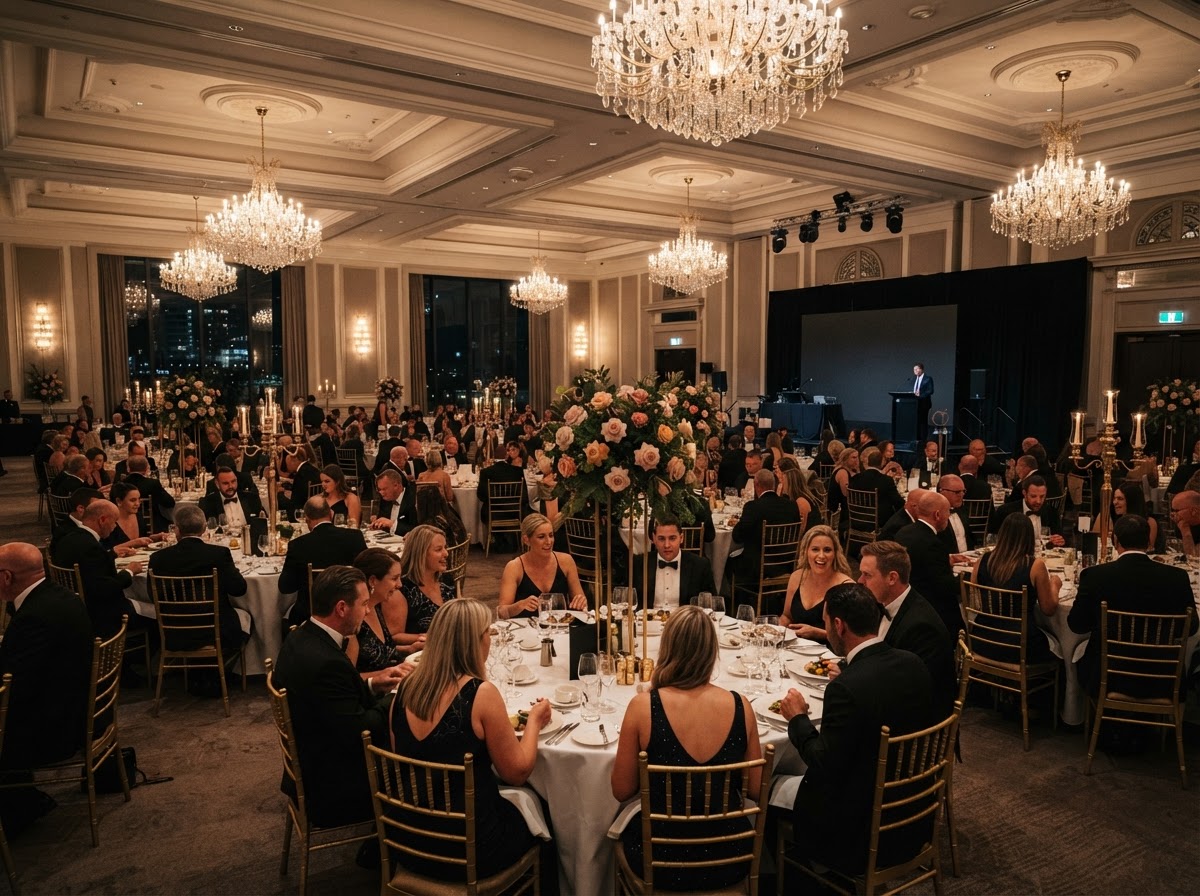
A well-run corporate event in Gold Coast and Brisbane does things that no other internal communication mechanism can replicate. It creates shared experience. It recognises people publicly and in a context that signals their organisation's investment in them. It builds relationships between individuals who might otherwise interact only through email. When it is done well, people carry the impression it creates for months.
When it is done poorly, it achieves the opposite. A disorganised event communicates disorganisation. A visually underwhelming room communicates that the organisation does not value the occasion. A run sheet that falls apart at nine o'clock on the night creates a memory of stress rather than celebration.
The difference between these two outcomes is almost always traceable to planning. This step-by-step checklist covers the full corporate event planning process for Gold Coast and Brisbane events, from initial brief through to post-event review. It is drawn from years of corporate event management in Southeast Queensland across gala dinners, award nights, product launches, conferences and leadership retreats.
Stage 1: Define the Brief Before You Do Anything Else
The most common source of corporate event problems in Gold Coast and Brisbane is an insufficiently defined brief. Teams begin booking venues and catering before they have agreed on what the event is actually for, and the decisions made in that vacuum frequently need to be reversed later at considerable cost.
Before any vendor is approached, answer these questions with specificity:
- What is the primary purpose of this event? Celebrate performance? Reward loyalty? Launch a product? Build culture? Different purposes require different design approaches.
- Who are the guests and what is their relationship to the organisation? A board dinner, a staff awards night and a client hospitality function have different expectations, different formality registers and different success metrics.
- What impression should guests leave with? Not what the event should look like, what should guests be thinking and feeling as they walk out?
- What is the total available budget, including contingency? Be specific here. A range of "around $50,000" creates planning uncertainty that cascades through every subsequent decision.
- What has happened at previous events of this type? What worked, what did not, and what are you explicitly trying to avoid repeating?
Get these answers documented and agreed by all relevant stakeholders before any other step proceeds. The decisions made in subsequent stages will be better, faster and cheaper when they are anchored to a clear brief.
Stage 2: Set Your Timeline and Lock in Key Dates
The Gold Coast and Brisbane's corporate event calendar has predictable pressure points. The end-of-year period from November to mid-December is heavily booked. The EOFY period drives a second surge in May and June. Venues and preferred suppliers in Gold Coast and Brisbane book out quickly during these windows.
As a general guide for corporate event planning in Gold Coast and Brisbane:
- 12+ months out: Secure venue for large-scale events (200+ guests) during peak periods
- 6-9 months out: Venue confirmed, event management and styling engaged, catering in discussion
- 3-6 months out: All major suppliers contracted, guest communications underway, design concept approved
- 6-8 weeks out: Final guest numbers confirmed, run sheet drafted, AV and lighting brief finalised
- 2 weeks out: Run sheet finalised, all suppliers confirmed, bump-in schedule set
- Week of: Pre-event briefing with all on-site staff and suppliers, final walk-through with venue
Events planned with shorter lead times than these guidelines are not impossible, but they require either flexibility on supplier choices or a premium for expedited availability.
Stage 3: Venue Selection for Gold Coast and Brisbane Corporate Events
The Gold Coast and Brisbane have a well-developed corporate event venue market spanning the Brisbane CBD, South Bank, Fortitude Valley and Hamilton through to the Gold Coast's beachfront and hinterland venues. The right venue for your event depends on four factors that need to be evaluated simultaneously rather than sequentially.
Capacity and configuration: Does the venue accommodate your guest count in the format you need, sit-down dinner, cocktail-style, conference-and-gala, or hybrid? Many Gold Coast and Brisbane venues have theoretical capacities that are only achievable in configurations that do not serve corporate events well.
Technical infrastructure: AV capability, power access, internet reliability and loading dock access for suppliers all vary significantly between venues. Events with complex production requirements, large screens, multiple audio zones, exhibition elements, need venues that have been built for them.
Exclusivity and control: A venue that is hosting a second event simultaneously creates noise, traffic and logistics complexity that affects your guests' experience. Understand clearly whether your event will have exclusive use of the spaces you are booking.
Supplier flexibility: Some Gold Coast and Brisbane venues have preferred supplier lists that limit your ability to bring in your own catering, your own event hire or your own styling team. If you have existing supplier relationships or specific quality requirements, confirm whether the venue allows you to bring them in before you sign the venue contract.
Stage 4: Build Your Supplier Team
A corporate event in Gold Coast and Brisbane typically involves multiple specialist suppliers working in coordination. How well they coordinate with each other, and with your event management team, has a direct bearing on the outcome. Suppliers who are unfamiliar with each other's working styles create gaps. Suppliers who have worked together before solve problems collaboratively.
The core supplier team for a Gold Coast and Brisbane corporate event generally includes:
- Event management: Responsible for the overall planning process, supplier coordination, run sheet management and on-the-night operations
- Event stylist and hire: Responsible for the visual environment, styling concept, hire elements, florals, linen, furniture and installation
- Catering: Venue in-house catering or an approved external caterer, covering menu, beverage service and staffing
- AV and production: Sound, lighting, screens, stage management and technical operation
- Entertainment: Speaker bureau, band, MC or other entertainment components depending on the event format
- Photography and videography: If the event is to be documented for internal communications, social media or awards submissions
Working with a single operator who manages multiple aspects of this stack reduces your coordination load significantly. Black Silk Events manages the event production and styling layer, which means you have one team responsible for the look, feel and operational delivery of the event rather than managing separate relationships for each component.
Stage 5: Design the Guest Experience
Corporate event planning in Gold Coast and Brisbane often focuses disproportionately on logistics and underinvests in the guest experience design. The run sheet is critical, but the run sheet is invisible to guests. What guests experience is the physical environment they move through, the sequence of moments they encounter, and the accumulated impression those moments create.
Work through the event from a guest's perspective, moment by moment:
- What do guests see and encounter on arrival? Is there a clear greeting point? A way to navigate to the right space?
- What is the atmosphere in the room when guests first enter? Does it communicate the occasion clearly?
- How is the event sequenced? What is the pacing between arrival, pre-dinner drinks, seating, program elements and departure?
- Are there deliberate moments of surprise or delight built into the evening, or is the format entirely predictable?
- What do guests take away from the event, physically or experientially, that extends the impression beyond the night itself?
The answers to these questions shape the brief for your event stylist, your AV team, your caterer and your entertainment. They are design decisions, not logistics decisions, and they belong in the planning process earlier than most organisations place them.
Stage 6: Build and Manage the Run Sheet
The run sheet is the operational backbone of your event. It documents every moment of the evening in sequence, with time allocations, supplier responsibilities and contingency notes. A good run sheet is specific enough to be actionable and flexible enough to absorb the minor variations that every live event produces.
For a Gold Coast and Brisbane corporate dinner or award night, the run sheet should cover:
- Bump-in schedule for all suppliers (typically starting several hours before guest arrival)
- Guest arrival window and cocktail hour program
- Room opening and seating call
- Food and beverage service timing (courses, matched to program elements)
- All program elements in sequence with allocated time for each
- Contingency time built into each major transition
- Bump-out schedule for all suppliers after event close
Share the run sheet with all suppliers no later than one week out. Allow time for suppliers to flag conflicts or constraints before the day, rather than discovering them during the event itself.
Stage 7: Brief Your On-Site Team
Every person working your event, whether employed by your organisation or by a supplier, needs to know their specific responsibilities, the run sheet they are operating within, and who to contact if something needs to be escalated. An in-person briefing in the days before the event is worth the time it takes.
Cover these items in your pre-event briefing:
- Event overview, purpose and guest profile
- Individual roles and responsibilities on the night
- Communication protocols, who is the event operations lead, and how are decisions made if something needs to change quickly
- Known risks and contingency plans
- Post-event expectations including bump-out requirements and timing
Stage 8: Post-Event Review
The post-event review is the step most organisations skip and then repeat the same problems at the following year's event. Within a week of the event, while impressions are current, collect structured feedback from your team and from a cross-section of guests. Review the run sheet against what actually happened. Note what worked, what did not, and what you would change.
Document this review and keep it with the event file. It is the single most valuable input to the planning of your next corporate event in Gold Coast and Brisbane, more valuable than any new brief or new inspiration, because it is grounded in what you actually experienced rather than what you imagined.
Planning a Corporate Event in Gold Coast and Brisbane?
Black Silk Events manages the full production of corporate events across Southeast Queensland. From initial brief to post-event pack-down, we handle every detail so you can be present for the event rather than operating it.
Talk to Our Team